Part of: Paying in Brazil
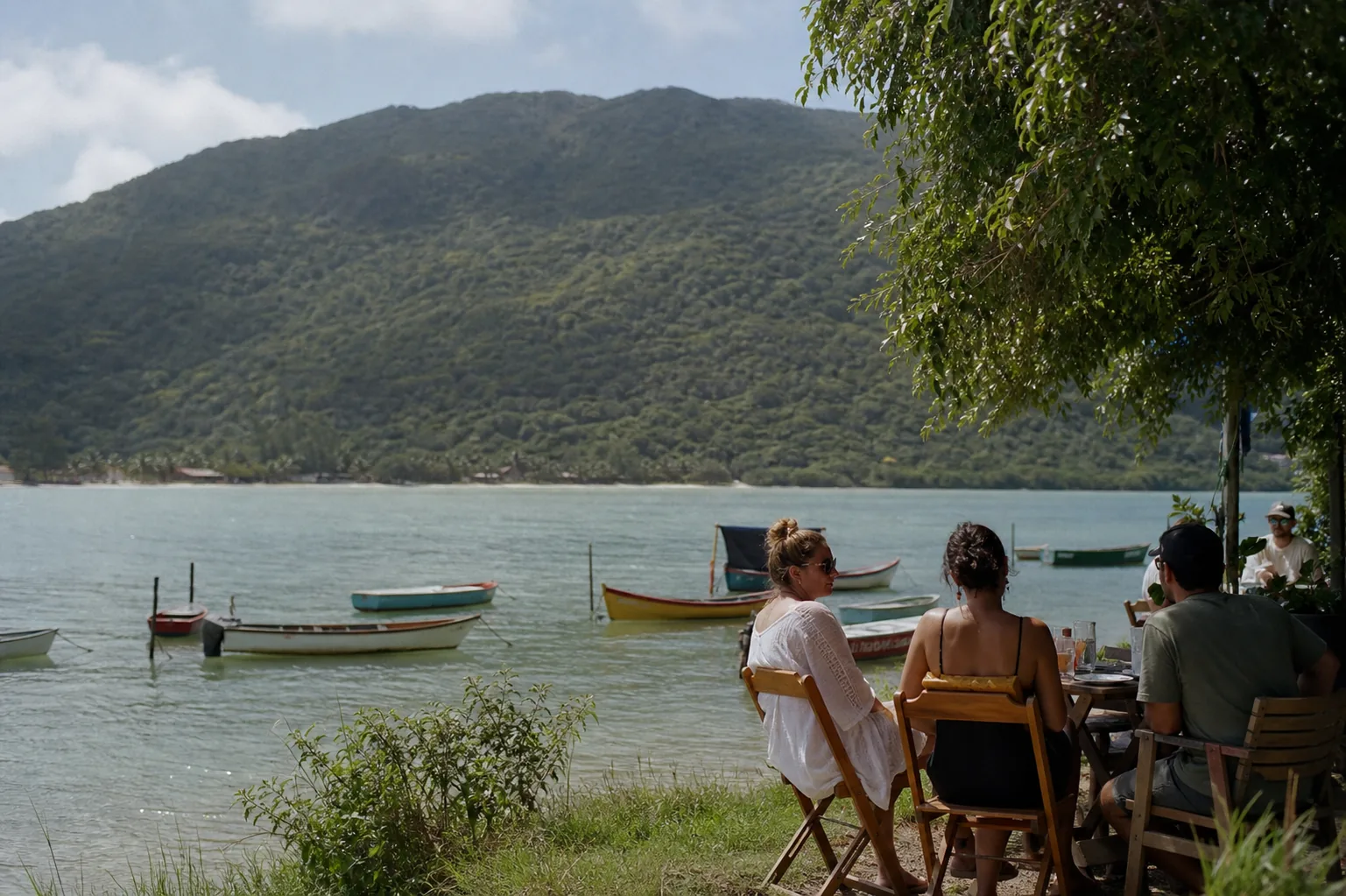
Florianópolis is a real island (Santa Catarina Island, tied to the mainland by the Hercílio Luz bridge and two newer crossings), and it’s a big one. The neighborhoods a remote worker actually cares about are scattered across all of it, not clustered downtown: Centro to Lagoa da Conceição runs about 15 minutes, Centro to Campeche is a similar stretch, and Centro to Jurerê can run 30 to 40 minutes or more depending on traffic. Say that plainly before anything else, because it shapes a month here more than any single neighborhood pick does.
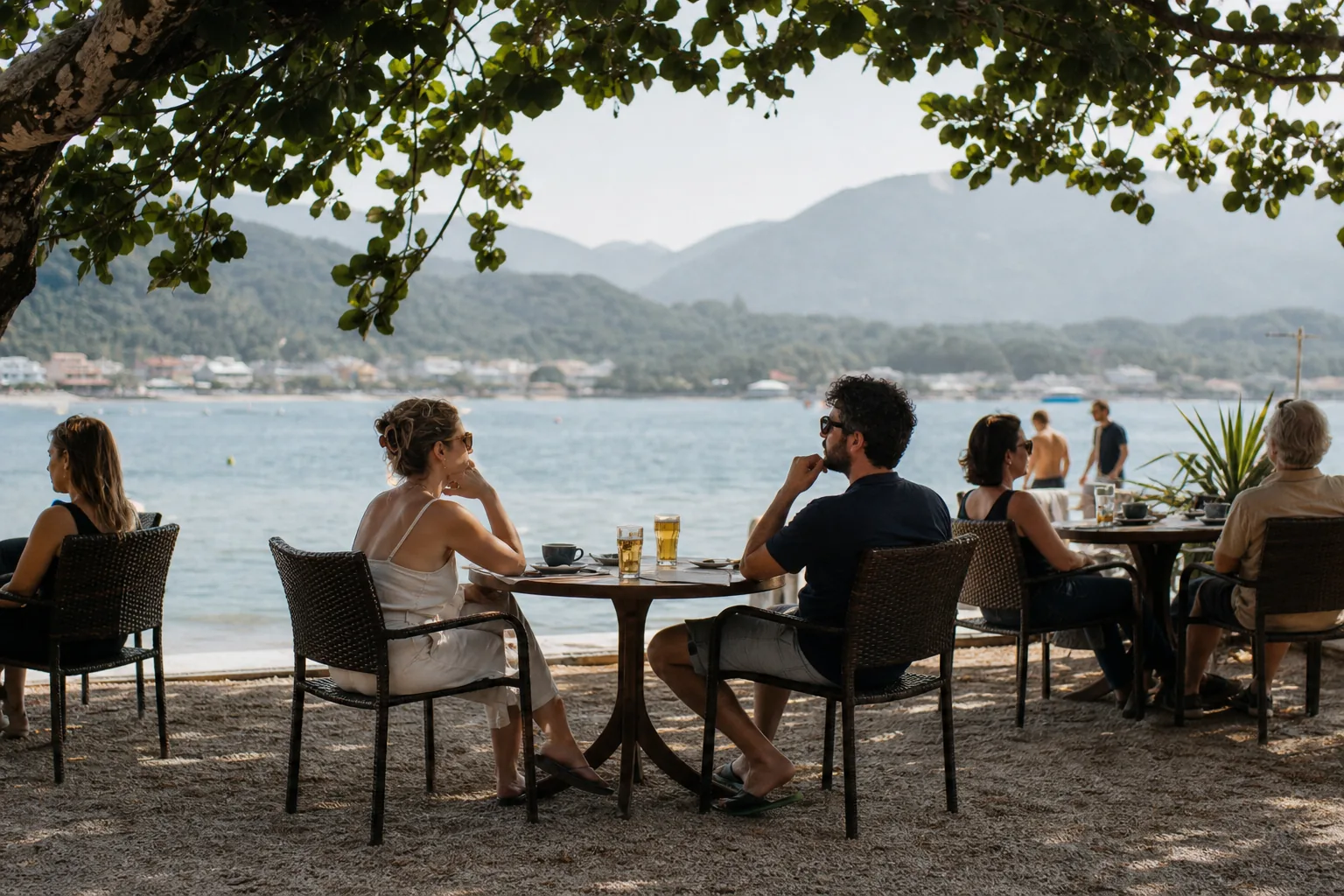
The other fact worth knowing up front: Floripa runs on two calendars. December through February is peak season, and the beaches, the lake road, and the restaurant prices all reflect it. Outside that stretch, the same neighborhoods slow down and get noticeably easier to live in.
Where to base
Lagoa da Conceição, the nomad heart
A lakeside village wrapped around a lagoon, five minutes from Joaquina and Mole beaches, thick with cafés, coworking spots, and other remote workers: the island's default digital-nomad hub for years running. Walkable, socially easy for a solo arrival, but the popularity shows: summer crowds and lake-road gridlock, and rents that run mid-to-high for the island, especially December through February.
Barra da Lagoa, the surf-village adjunct
A former fishing village at the mouth of the lagoon channel, descended from Azorean-Portuguese families, now a mellow surf-and-nomad enclave a short ride from Lagoa proper. Fourteen kilometers of connected beach, mellow beginner-friendly waves, and real fishing-village character at a step down from Lagoa da Conceição's prices: the pick if you want the same scene for less money.
Campeche, the quiet alternative
A long, uncrowded surf beach on the southeast coast with a small-town, artsy, wellness-leaning community: the neighborhood nomads try after they've already done a Lagoa stint. An organic market, cozy cafés, and its own coworking presence make it more than a residential stretch, but nightlife and restaurant options thin out fast, and a scooter or car is close to essential to reach Centro or the north beaches.
Jurerê Internacional, the upscale north-shore resort
A planned, Miami-inspired district on the north shore: wide tree-lined streets, beach clubs, high-end restaurants, and a manicured, gated feel unlike anywhere else on the island. Genuinely low crime and real beach-club polish, but it's 25 to 27 kilometers from Centro, priced for tourists and second-home owners, and the least 'everyday Brazil' feeling of any area here. Jurerê Tradicional next door, with no physical boundary between the two, is the older, cheaper, more mixed alternative.
Centro, the practical core
Colonial-meets-contemporary downtown on the island side of the bridge: the Mercado Público, banks, the ferry and bus terminal, and a working city rather than a beach-resort mood. Multiple coworking spaces, easy errands, and the most day-to-day practicality on the island, but you're commuting to the coast for a beach day, and it empties out after dark like most downtowns.
Trindade and Córrego Grande, the infrastructure area
Inland neighborhoods built around UFSC, the federal university (practical rather than scenic, but arguably the island's best pure remote-work infrastructure): reliable multi-provider fiber, mid-range rent, and coworking nearby, including Vilaj Coworking, running since 2011. No walk-to-water lifestyle here; base here if reliable internet and desk access matter more than a sea view.
Ingleses, the family-friendly north beach
A big, developed, budget-leaning beach town on the north shore with real year-round infrastructure (banks, supermarkets, a post office) rather than a boutique resort strip. Safer and more affordable than Jurerê or Lagoa, with a walkable evening strip, but it sits at the island's far north end, so a scooter or car is essential to reach Lagoa, Campeche, or Centro.
Canasvieiras and Santo Antônio de Lisboa, a visit more than a base
Canasvieiras is a calm-water family beach popular with tourists; a few kilometers south, Santo Antônio de Lisboa and Sambaqui are genuinely old Azorean fishing villages — Santo Antônio dates to 1751 — with preserved colonial architecture and a real sunset-dinner food scene along what locals call the Sunset Gastronomic Route. Neither is a working-nomad hub; treat this stretch as a food-and-sunset outing rather than a month-long base.
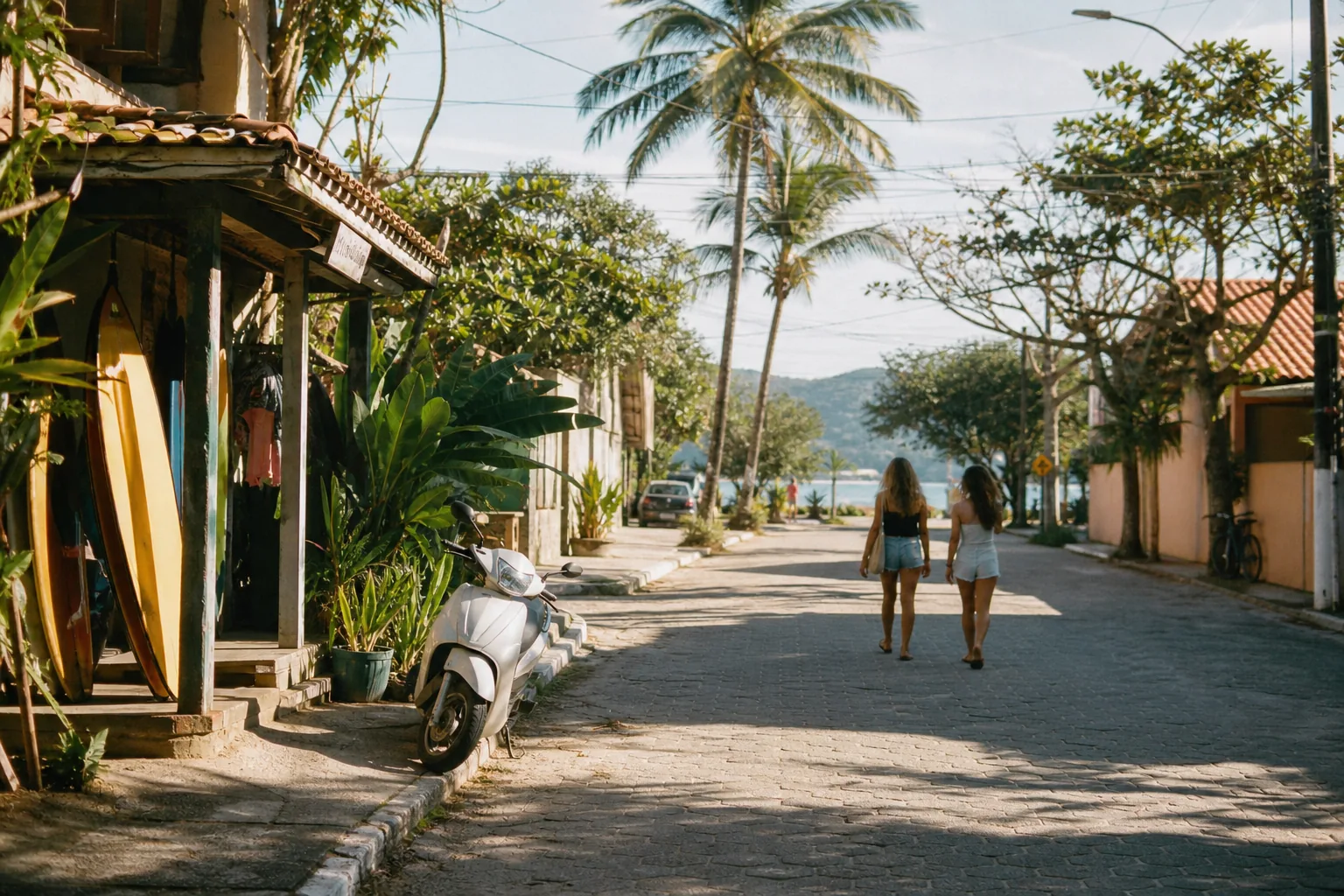
Floripa isn't a city with neighborhoods. It's an island with a driving problem, and a very good beach on the far side of it.
Mistakes to avoid
Picking a neighborhood before checking the drive time
Jurerê and the north beaches look close to Centro on a map and aren't: budget 30 to 40 minutes, not 10. Check the actual drive time to wherever you'll spend your working days before you commit to a month somewhere pretty but far.
Assuming the whole island is as walkable as Lagoa
Lagoa da Conceição's compact, café-dense center is the exception, not the rule. Most other neighborhoods here assume a scooter, a car, or a steady ride-app habit. Plan your transport before you plan your rental.
Booking Jurerê expecting the nomad scene
Jurerê buys resort polish and beach-club energy, not the café-and-coworking density that makes a working month easy. If community and desk access matter more than gated-resort comfort, Lagoa da Conceição or Campeche are the better fit.
Ignoring the summer-to-offseason swing
December through February brings real crowds, real traffic, and a real jump in prices, especially around Lagoa da Conceição. If your schedule is flexible, the shoulder months buy a calmer, cheaper version of the same island.
Common questions
Which neighborhood for a first month?
Lagoa da Conceição, most of the time. It's the island's established nomad hub (walkable, thick with cafés and coworking, and five minutes from Joaquina and Mole beaches), so a first month runs on the least amount of logistics. Barra da Lagoa, one lagoon over, buys the same lake-and-surf access for less money once Lagoa's popularity has pushed its rents past what you want to pay.
Do I actually need a car in Florianópolis?
Functionally, yes, unless you're staying inside one small radius for the whole month. The island runs about 424 square kilometers, and Centro to Jurerê alone is a 30-to-40-minute drive depending on traffic. City buses exist but aren't fast or dense enough to rely on for cross-island living, so most longer-stay nomads end up with a scooter, a car, or a heavy ride-app habit.
Is Jurerê Internacional worth basing in for a month?
For most remote workers, no. It's the most polished, most manicured part of the island: a planned, Miami-style resort district with real beach-club culture and some of the lowest crime on the island. But it's also the farthest from Centro, at 25 to 27 kilometers, and priced for tourists and second-home owners rather than a working month. It suits a shorter, higher-budget stay better than a first base.
What changes between summer and the rest of the year?
A lot. December through February is Floripa's peak season: the beaches fill up, traffic gridlocks around Lagoa da Conceição's lake road, and rent and eating-out prices both climb noticeably. Outside that window, the same neighborhoods are quieter, cheaper, and considerably easier to actually live and work in. Worth timing a longer stay around if your schedule allows it.
Where's the quiet alternative to Lagoa da Conceição?
Campeche, for most people who've already done a Lagoa stint. It's a long, uncrowded surf beach with a small-town, artistic feel: an organic market, cozy cafés, and reportedly better fiber coverage than most other beach neighborhoods, but with less nightlife and fewer restaurants than Lagoa, and you'll still want a scooter or car to reach the rest of the island.