Part of: Paying in Vietnam
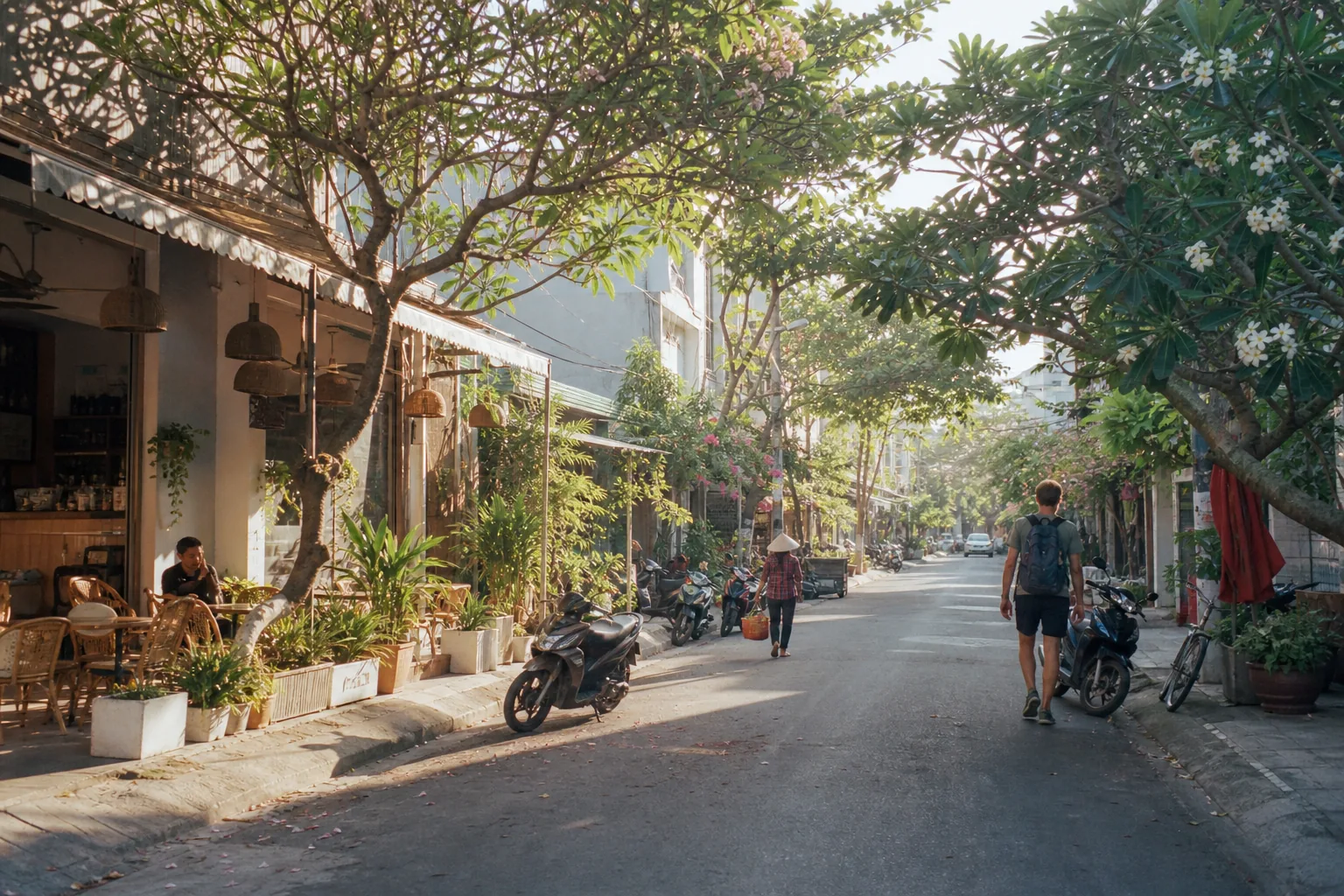
Da Nang splits along one line more than most cities: the beach strip against the real city, with a nomad bubble sitting inside the beach strip and everything else spread out around it. An Thượng gets most of the attention. It’s where the coworking desks, the smoothie bowls, and most of the other remote workers already are, but it’s one trip among several. My Khê puts the sand at your door, Sơn Trà and Hải Châu each trade the scene for something quieter or more local, and a scooter puts all of them within easy reach of one another.
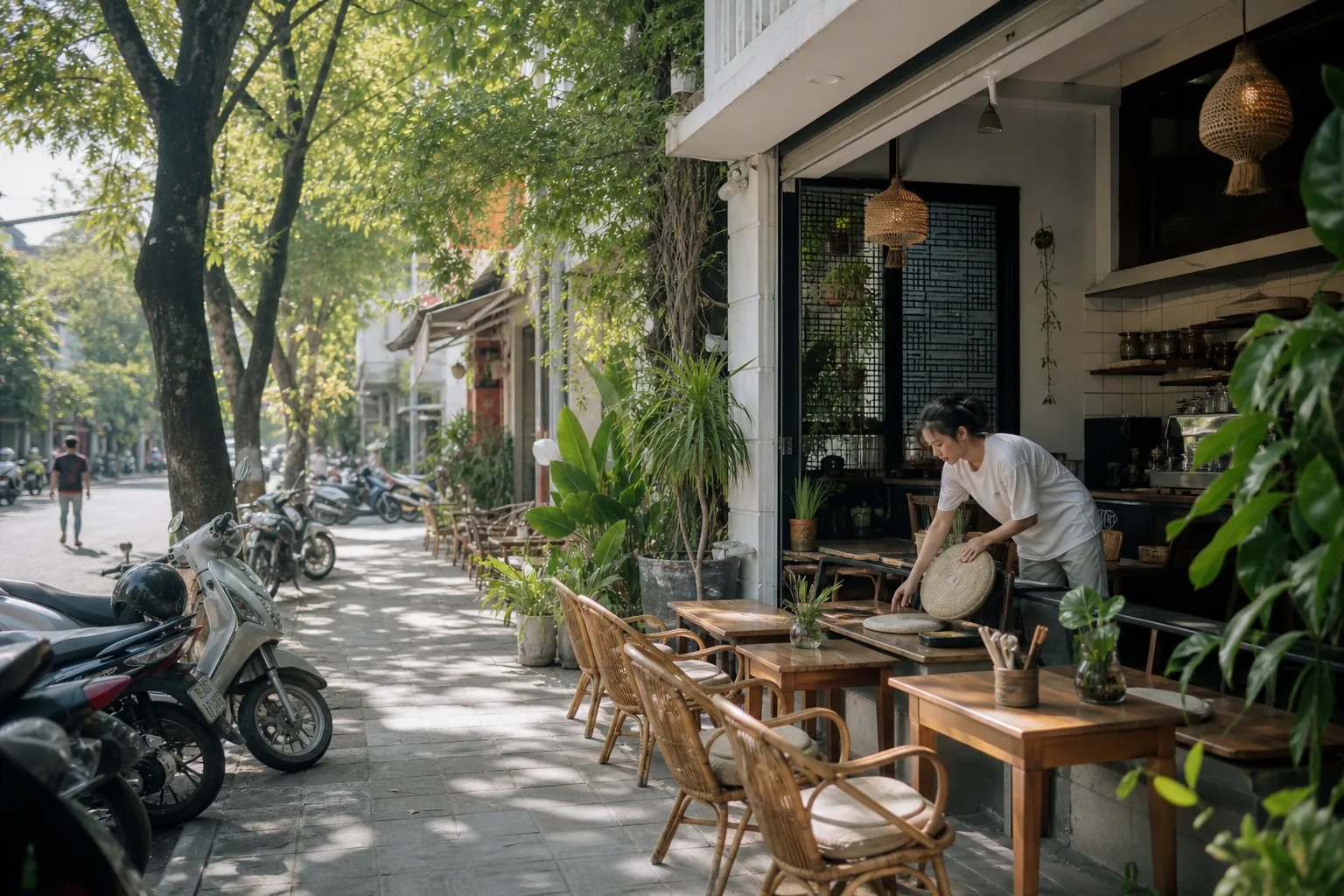
None of them is a wrong choice. They’re different trips, and Da Nang is small enough that no pick is more than a scooter ride from any other.
Where to base
An Thượng (My An): the nomad hub
Two or three blocks back from My Khê beach, An Thượng is Da Nang's answer to Canggu: a dense grid of cafés, coworking desks and smoothie bowls, walkable in a way most of the city isn't. It's the highest concentration of remote workers and workspace options anywhere in Da Nang, and expats rate it the most livable pocket for exactly that reason. The trade is a visible expat bubble: construction noise, backpacker crowds, rents climbing faster here than anywhere else in the city. Base here for the path of least resistance on a first stay; everything you need sits inside a ten-minute walk.
My Khê Beach: the beach corridor
The long white-sand stretch that put Da Nang on the map, backed by a steady run of beach bars, seafood shacks and resort towers along Võ Nguyên Giáp street. If the point of the trip is waking up, swimming, then working, this is the base: genuinely good, swimmable sand and a dense cluster of cafés within walking distance. It runs touristier and louder at night than An Thượng's inland grid and isn't where you go for quiet focus work, but a Grab or scooter puts An Thượng's coworking scene minutes away.
Sơn Trà Peninsula: quiet, green, and local
Jungle-covered hills dropping straight to the coast, quiet and residential, with the centuries-old fishing village of Man Thái still running a dawn seafood market at its foot. This is where you go once you've already done a first Da Nang stint and want out of the nomad-bubble feel: traditional markets, villa-style housing, the Sơn Trà Nature Reserve on your doorstep. The real cost is coworking: there's essentially none here, so most residents work from home or commute back to An Thượng for a desk. Base here to live like a resident, not a cluster.
Hải Châu: the real city center
Da Nang's actual downtown: the Han River, Dragon Bridge, the old Cồn and Hàn markets, real Vietnamese city life rather than a beach-resort veneer. It's the best neighborhood for street food and market culture, with better transit links and a couple of serious coworking spaces of its own near the river. What it doesn't have is the beach at your door (you're a solid three kilometers out), and the nomad social scene is thinner than An Thượng's. Base here if you want to live in a Vietnamese city, not an expat enclave, and don't mind scootering to the sand.
Ngũ Hành Sơn / Non Nước: quieter still
The quiet southern end of the beach strip, with the Marble Mountains (five limestone peaks threaded with Buddhist cave shrines) looming over Non Nước beach. Housing runs to villas and pools rather than walkable blocks, the beaches are quieter than My Khê, and it's a convenient stop if Hội An is on the itinerary, sitting closer to the Da Nang end of that drive than the halfway mark. Café and coworking culture here is thin even by Da Nang standards, and a scooter or car stops being optional. Base here for a spacious, quiet month with your own transport, not for a plug-and-play scene.
Phạm Văn Đồng / An Hải Bắc: central, food-first
The seafood-restaurant strip between downtown and Sơn Trà. Phạm Văn Đồng is, plainly, a street where nearly every door leads to a seafood dinner, with its own quieter stretch of beach behind it. It sits genuinely central, an easy ride to both Hải Châu and An Thượng/My Khê, which makes it a reasonable base if food and centrality matter more than a built-in workspace scene. Daytime remote-work infrastructure is thin here; you'd commute to An Thượng or Hải Châu to actually work, then come back for dinner.
Thanh Khê: budget and local
A working residential district inland from the tourist strip: cheap, local, and functional, with minimal nomad infrastructure of its own. Rent runs meaningfully lower than An Thượng or Sơn Trà, the streets are quieter, and Grab gets you to the center or the beach easily enough. Treat it as a bedroom, not a workspace: there's no real café or coworking scene to speak of, so budget has to be the reason you're here, not convenience.

Every neighborhood here is a twenty-minute scooter ride from every other one. The hard part is picking which twenty minutes you want to live in.
Mistakes to avoid
Picking An Thượng without expecting the crowds
It's the path of least resistance, not a quiet retreat. The construction noise, backpacker crowds and climbing rents are real, so book a short first stay before committing to a full month there.
Assuming Sơn Trà or Ngũ Hành Sơn have coworking
They don't, really. Coworking and serious café culture concentrate in An Thượng, with a handful of options in Hải Châu. Base in the quieter peninsulas and you're commuting in for a desk most days.
Basing in Hải Châu expecting a walk to the beach
It's a genuine Vietnamese city center, not a beach neighborhood. The sand is a solid three kilometers out. Base there for the food and the transit links, and plan on a Grab or scooter for the beach.
Committing to a long lease before you've walked it
A neighborhood that reads well online can feel wrong once you're standing in it. Book a week or two first, then decide. Da Nang is compact enough that changing your mind costs you a short ride, not a wasted month.
Common questions
Which neighborhood for a first Da Nang stay?
An Thượng, without much debate. It puts you inside a ten-minute walk of coworking desks, cafés, and My Khê beach while the city is still new to you, and it's where most of Da Nang's other remote workers already are. It's not the cheapest or the quietest pick. Rents there have climbed faster than anywhere else in the city, but for a first month the convenience earns its keep. Move outward once you know what you actually want.
Is An Thượng too much of an expat bubble?
That's the honest trade. It's visibly gentrifying: construction noise, backpacker crowds, the occasional late-night karaoke, and it can feel more like a nomad cluster than Vietnam. If that bothers you on a first trip, it tends to bother you more on a second one; that's usually when people drift to Sơn Trà or Hải Châu instead.
Where's quieter than An Thượng, and how far is it really?
Sơn Trà Peninsula for quiet and green, with Man Thái's dawn fishing market at the foot of it, though you'll be commuting back toward An Thượng for coworking since there's essentially none locally. Hải Châu for the opposite trade: real Vietnamese city life, the Han River, Cồn Market, better transit, and a couple of solid coworking spaces of its own, about three kilometers from the sand. Neither is far: Da Nang is compact enough that a Grab or scooter between any two of these bases rarely runs past twenty minutes.
How long should I book before committing to one area?
Start with a week or two, same rule as anywhere. An Thượng gives you the fastest read on whether the nomad scene is your thing. A few days there tells you whether to stay put or head somewhere quieter for the rest of the month.
What does a furnished month cost in Da Nang?
Rents move fast and vary block to block. The beach corridor and An Thượng have been the steepest climbers recently, Sơn Trà and Hải Châu sit a step below, and Thanh Khê is the budget end. Prices shift within a season, so rather than quote a figure that dates fast, compare live listings once you're on the ground and book a short first stay before you commit to a neighborhood.